Foundation, Concrete and Earthquake Engineering

Great Achievement of Japan on Seismic Hazard and Prediction in the Last Three Decades

Japanese seismologists were active in almost every aspect of seismological research during the last three decades. The recent researches in Japan (as of 1993) are summarized in Special Issue of Journal of Physics of the Earth (Vol. 43, Nos. 3-5, 1995). Special Issues of Zisin (J. Seism. Soc. Japan), Vol. 44 (1991) and Vol. 50 (1998) carrying 30 and 24 review papers and several other review papers in the same journal during the 1990s are also useful to evaluate recent seismological researches in Japan, but these are written in Japanese. In recent years, more than 300 papers have been presented at every meeting of the Seismological Society of Japan held twice a year. I only cite some of the research objectives for which Japanese seismologists have made significant achievements.
Urgent Earthquake Bulletin service


Distribution of Japan Railway’s Alarm Seismometers*
* Courtesy of Dr. Y. Nakamura

1. Dense telemetered seismic networks including the cable type OBS stations.
2. Dense networks of digital strong motion seismographs.
Area Mail system sends signals quicker
than the earthquake can move.
3. Quick determination of source parameters and early warning system.
4. Broadband seismic networks in the western Pacific area.
OceanNet buoy
5. Recurrence patterns of earthquakes from active faults, marine terraces, tsunami deposits, historical   earthquakes, etc.
6. Earthquake sequences, seismicity patterns, and probability of earthquake occurrence.
7. Earthquake triggering by stress changes by tides, earthquake dislocations, etc.
8. Earthquake precursors in geochemical, hydrological, geodetic, electrical, and seismic  data.
9. Simulation of strong ground motion waveforms.

A Brief History Of The Drill

Drills with a percussive action (such as hammer drills, jackhammers or pneumatic drills) are usually used in hard materials such as masonry or rock. The drill bit is gripped by a chuck at one end of the drill, and is pressed against the target material and rotated. The earliest drills were probably bow drills. The hammer drill is similar to a standard electric drill, with the exception that it is provided with a hammer action for drilling masonry.

Types of Drill

A drill press (also known as pedestal drill, pillar drill, or bench drill) is a fixed style of drill that may be mounted on a stand or bolted to the floor or workbench. A radial arm drill is a geared head drill that can be moved away from its column along an arm that radiates from the column. The other end of the drill bit, the shank, is described in the drill bit shank article I wrote last week. Low spiral drills are used in cutting applications where high cutting speeds are traditionally used, and where the material has a tendency to gall on the drill or otherwise clog the hole, such as aluminum or copper. The drills have an extremely fast cutting tool geometry: no point angle and a large (considering the flat cutting edge) lip angle causes the edges to take a very aggressive cut with relatively little point pressure. The flutes of the drill bit body carry away the dust.

Drilling

Slower speeds are also necessary for things such as polishing, finishing, and soft tissue drilling,so dental drills are typically equipped with secondary motors. Today's giant drilling trucks use steel cable, longsteel bits weighing up to several thousand pounds, and have rugged diesel engines which raise and lower the tools quickly andeasily--so that two men can drill hundreds of feet by themselves in a matter of days.

Tool Bits

Introduced by Unibit Corporation in the 1980s (formerly a subsidiary of Petersen Manufacturing Company and now part of Irwin Industrial Tools), step bits have been copied by other manufacturers since the patent expired. This is ideal for a bit for a hand tool. You never lose them, either - that DeWalt yellow shouts at you from across the room, across the lot or from under a pile of tools and offcuts.


Cordless Drills

For projects around my house it has plenty of power although, like every other cordless tool I have used, it needs a little more time drilling/driving through hard wood. The modern day CableTool drill uses the same technique as the percussion drill, but in much larger sizes. But the hand powered percussion drill, which was used to make the first wells in Asia, Europe, and the United States, is a time-tested tool that is easy to build and inexpensive to maintain.

Dewalt

You can see from this what DeWalt 18V drill-drivers have done and can do, and still I have not had the slightest problem, though they look pretty beat up now. The Dewalt DC925KB is a powerful 18 Volt combination power tool for heavy duty hammerdrilling and screwdriving applications. This review will help you decide which DeWalt 18volt tools to use for every situation. We deal with high-quality, popular brand names, which you've come to trust like DeWalt, Bosch, Ingersoll-Rand, and Chicago Pneumatic. The DeWalt cordless hammer drill comes in a half-inch size, offering plenty of power, an affordable price, and features worth the purchase. Well, trials showed that the DeWalt drill worked faster than Milwaukee's drills, and the battery lasted longer than other brand models. The DeWalt cordless hammer drill comes with two 36-volt batteries, a one-hour charger and a heavy-duty kit box. Now I have a whole lot of DeWalt HD 18V tools, because these two drill-drivers performed so well I was not afraid to buy into a lot of tools in the same line.

Seismic Gas Valve for Earthquake Safety

The utility companies recommend to shut off  gas immediately after an earthquake if one smell gas. If you are at work or away when an earthquake hits, then you may not be able to get home in time. So a automatic system is required to shut off gas flow to avoid fires or explosions due to gas line breaks which may worsen the situation after an earthquake. An earthquake valve will take care of this instantly for you. An earthquake valve or seismic valve is an automatic way to shut off the low pressure regulated gas supply to a structure during a major earthquake and/or if a pipe is broken. These are applicable both to utility supplied natural gas and to gaseous liquefied petroleum gas (LPG).

A natural gas earthquake shut-off valve automatically shuts off your gas service when an earthquake of a sufficient magnitude occurs at your home's location. After the quake has stopped and you have determined that it is safe to do so, follow the manufacturer's instructions for restoring your gas service. You will need to make sure no gas leaks exist and re-light your pilot lights. You must ensure that your appliances are safe before operating them. The Gas Company charges a fee to reset valves and re-light pilot lights when your seismic shut-off valve has closed due to a non-seismic occurrence.
 If you like to install an earthquake gas shut-off valve, or are mandated to have one by your insurance company or the local building code, the valve must be installed on the downstream side of the meter. The downstream side is the customer side of the meter.

The Gas Company recommends that you contact a licensed, qualified professional or The Gas Company to reset the valve, and to verify that no gas leaks exist, to ensure that all of your gas appliances are safe before being placed back in operation and to re-light your pilot lights. Remember that following a major emergency it may take many days or even weeks before someone can come to your location.

The strange little red thing on the gas pipes (left) is an earthquake valve. It shuts off the gas automatically if there is an earthquake.

There are Two types of valve, one is sensitive to motion and the other to excessive gas flow. The most secure installations would use one of each type connected in series.

Excessive flow sensor: A valve is closed when the flow exceeds a certain limit appropriate to the application. This will only operate when a pipe is broken, and so may not operate if a small (yet potentially dangerous) leak is present. If activated, any faults in the piping must be first repaired.

Motion sensing caged ball: A metal ball is retained away from an orifice by sitting upon a ring. Any shaking of the mechanism will cause the ball to roll of its ledge and fall down to block the orifice. it is reset using either an external magnetic device or an internal lift mechanism. If too sensitive it may be triggered by passing vehicles on a rough road. In the case of a severe seismic event, the gas piping should be completely inspected for breaks before resetting and then "sniffed" using a gas detector device after resetting. Since all pilot lights will go out, some appliances must be properly restarted once the device is reset. The safest means is to have the gas supplier inspect the piping and relight the appliances, even though this could take quite a while in an event affecting a wide area. Such inspections and relights are typically performed without charge by the provider.

Typical features of Electric Seismic Protection Unit Gas Maestro:


Seismic Zones Equipment Needs

Building a structure that will withstand the forces of nature is important. Some issues are overlooked when designing and building a structure to be seismic proof. The owner must do the research and here is some of that research:

...Not only structural member must withstand the impact of earthquake but also the owner should consider seismic zones equipment needs for the building. Seismic zones equipment needs should not be overlooked, since impact of earthquake can create numerous hazard situations that can injury and even kill occupants before and after the earthquake wave. For example, if there is a fuel tank of some sort as part of the design in or around the building, the entire system must be seismically certified.

Sample HVAC System
In the event of an earthquake when power source could be non operational, emergency power systems must be in place, especially for those owners that critically need it; for example, in health-care settings special code-compliant backup power system must be in place.

HVAC System
As part of seismic zones equipment needs, it is required that lighting fixtures that are lay-in tile ceiling system must be independently supported directly from the structure and be supported by building's support ceiling grid system. The system must be sway-braced from at least two points of connection.
HVAC Ducts
A HVAC system is another concern in seismic zones equipment needs. Proper bracing of round duct with diameter of 28 in and larger must be made. When duct work is unbraced, it must be installed with at least 6 in of clearance to ceiling-hanger wires. Proper Anchor bolts must be used to support equipment to prevent a pullout from earthquake effect. Fans, pumps, and a like, must have housing to resist lateral load forces from an earthquake.
Seismic Gas Shutoff Valve 60 psi Horizontal NPT 3/4"

The earthquake valve

Installation of seismic gas valves that automatically close the gas flow is an important consideration in seismic zones equipment needs. When such valves are not installed, the possibility of fire break out is quite high...

Tsunami Wall Entrace

The seawalls are typically built along the shoreline of inhabited areas that have suffered tsunamis.. They tend to restrict access to the shore and block the view of the sea from inland, often casting shadows on houses built along the shore. But because seawalls cannot be constructed along all of a community’s shoreline, they tend to be clustered along stretches that have been directly hit, leaving other areas exposed. The bad thing about tsunamis is that when they come again they usually don’t come at the same place they did before.

There was mixed information about Taro and the success of the wall. But now after tsunami generated by Honshu earthquake,  it looks very bad and the town was probably as badly hit as the rest of the coast. The wall helped to save townsfolk by giving them a few more minutes to get to safety. It seems at least 75% made it to higher ground and survived.

One side of Tsunami wall is the village and on the other side is the harbour and ocean. In case of an earthquake (possibly also underwater volcano), the alarm is sounded for a tsunami warning, the harbour evacuated and the entrance is closed.

This structure won't stop all tsunami from destroying this particular village, as there was a tsunami in the 1950s (1954?) I think that was a bit higher than this structure, but in general, it will stop 99% of tsunamis affecting this village. These structures are quite common in Japanese fishing villages. This wall was in Tohoku region, which is the on the main Japanese island of Honshu and is a few hundred km north of Tokyo.

Earthquake disasters - in-situ stress measurement in concrete - a component for the geolocation

With the new acousto elasticy sensors of IBJ Technology can be measured for the first time the concrete tension on-line permanently directly. No sensors are needed for the measurement of the stretch. The acousto elasticy effect seizes directly the influence of the concrete tension on the wave velocity of ultrasonic. This speed change of the ultrasonic waves directly in the sensor are measured. The sensors consist of a small measuring body, which is embedded in the concrete. The pressure strength of the sensors is so large, which is practically indestructible them. In practical attempts concrete inspection pieces were completely destroyed. The tension sensors get over this crash without prejudice to and remain in function. The concrete case of application of these new sensors of IBJ Technology for stress measurement in concrete are on-line measuring procedures for building security. The sensors are characterised by their special suitability for the remote monitoring of buildings of all kinds.
 
The instrumentation use of the acousto elasticy effect makes qualitatively and quantitatively new measuring and safeguards methods possible in buildings and in the mountains. As example of possible applications the monitoring of local tensile states in buildings can be enough over Period to be called. Further new and at the same time economical applications result, like on-line monitoring of the answer spectrum of buildings of any kind in seismically active areas. Already during the building phase measurements are possible in foundations and stakes. Also tunnel-build with high overlays and/or large ground pressure features can so on-line be supervised. The measuring bodies can be brought in already in the phase of the building production, i.e. concreting. Also an additional installation into boreholes (method of the hard inclusion) or the spanning in expansion joints of buildings is possible. Innovative applications know a world-wide disaster net (disasters net).

The availability of means of transport and traffic center (roads, bridges, airports, tunnels) can within seconds be determined on-line. The representation of the destruction takes place with the geo location (Disasters Geolocation).

The activity of relief organizations can be arranged so efficient The administration and authorities of the states receive such an aid to the maintenance of public security. Seismic data describe only the geographical place and the strength. Reliable on-line data are missing for the degree of the destruction. Seismic sensors bring only measured values to acceleration. Data for the degree of the destruction must come objectively from the building (object).

Benefits of Close Cell Foam Insulation for Wall

Spray foam insulation is also much safer than other types of insulation. It is non-allergenic and contains no formaldehyde or chemicals that harm the ozone. It has a Class 1 fire rating (the best of all insulation materials), and inhibits mold and mildew growth. The insulation does not settle, contract, or biodegrade over time. Spray foam insulation can be either open-cell or closed-cell. Of the two, closed-cell foams (polyurethane) have the higher R-Value.

1. Foam acts like instant Glue securing your walls and roof to your house better than nails or screws.

2. Seals all holes around wires, pipes, roof flashings, vents.

3. Seals cracks for bugs and discourages squirals and rats that like fiberglass insulation.

4. Its water proof so it stops leaky roofing.

5. Used as an insulating system from crawlspace to roof it can stop air leakage and temperature swing. This can save  30 to  50% on heat and air costs over normal insulation would cost. At the same time you can downsize your heat and air and save even more.

6. Cuts way down on the amount of dust that is normal for most fiberglass insulation.

7. Difference in cost is recovered quickly with reduced electric bills reduced hvac equipment costs and energy tax credits.

8. Holds the house stucture together 1000 times stronger then conventional framing methods. Good for High Winds.

What are Tsunami Breakwaters?

The offshore structures that restrict the inflow of tsunami and storm waves into a harbor by narrowing the entrance are Tsunami breakwaters. Using Google Earth a breakwater in Ofunato Bay on Japan’s Sanriku Coast can be viewed.


Breakwaters are built as underwater berms and topped with an armor unit that dissipates incoming wave energy. Breakwaters are subject to scouring (erosion) at the base of the structure. They also have the potential to change a bay’s environment by decreasing water circulation.

Tsunami Breakwaters
Tsunami Breakwaters

Tsunami Breakwaters

Tsunami Breakwaters

Fukushima Wants Concrete Burying Like Chernobyl

The last week's huge quake and tsunami driven a nuclear crisis, which has left at least 17,000 people dead or missing. Though France's Nuclear Safety Authority, has rates the Fukushima crisis at six on the scale.(AFP) this crisis was previously rated as local problem by Japanese authority. Now Japan has raised the alert level at its quake-damaged nuclear plant (Fukushima Daiichi) from four to five on a seven-point international scale of atomic incidents.

The UN says the battle to stabilise the plant is a race against time.

Japanese nuclear officials said core damage to reactors 2 and 3 had prompted the raising of the severity grade, reports BBC.

The 1979 incident at Three Mile Island in the US was also rated at five on the scale, whereas the 1986 Chernobyl disaster was rated at seven.


But they still hoped to solve the crisis by fixing a power cable to two reactors by today to restart water pumps needed to cool overheating nuclear fuel rods. Workers also sprayed water on the reactor 3, the most critical of the plant's six.
It was the first time the facility operator had acknowledged burying the sprawling 40-year-old complex was possible, a sign that piecemeal actions such as dumping water from military helicopters or scrambling to restart cooling pumps may not work, Reuters reports.
"It is not impossible to encase the reactors in concrete. But our priority right now is to try and cool them down first," an official from the plant operator, Tokyo Electric Power Co, told a news conference.

Gift of Chernobyl
That is little solace for about 300 nuclear plant workers toiling in the radioactive wreckage, wearing masks, goggles and protective suits with seams sealed off by duct tape to keep out radioactive particles. "My eyes well with tears at the thought of the work they are doing," Kazuya Aoki, a safety official at Japan's Nuclear and Industrial Safety Agency, told Reuters.

Gift of Chernobyl
Even if engineers restore power at the Fukushima Daiichi plant, the pumps may be too damaged from the earthquake, tsunami or subsequent explosions to work.

The first step is to restore power to pumps for reactors 1 and 2, and possibly 4, by today, said Hidehiko Nishiyama, Japan's nuclear safety agency spokesman.

By tomorrow, the government expects to connect electricity to pumps for its badly damaged reactor 3 -- a focal point in the crisis because of its use of mixed oxides, or mox, containing both uranium and highly toxic plutonium.
Chernobyl Nuclear Power Plant reactor meltdown(reactor no. 4)

Asked about burying the reactors in sand and concrete, Nishiyama said: "That solution is in the back of our minds, but we are focused on cooling the reactors down."


Burying the reactors would leave part of Japan off-limits for decades. "It's just not that easy," Murray Jennex, a San Diego State University in California professor said when asked about the so-called Chernobyl option to bury the reactors.
Cleaning operation of contaminant in Chernobyl

"They are kind of like a coffee maker. If you leave it on the heat, they boil dry and then they crack," he said. "Putting concrete on that wouldn't help keep your coffee maker safe. But eventually, yes, you could build a concrete shield and be done with it."

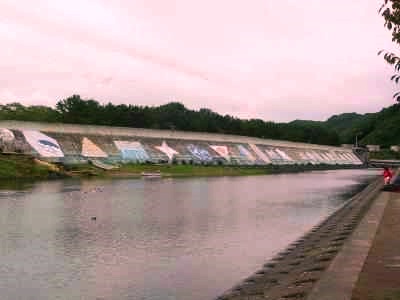
Taro tsunami wall: Not Enough!

In Japan the constructions of seawalls in the last decade are continued, and at least two massive antitsunami seawalls are under construction. One in Kuji, a city in Iwate Prefecture that was damaged in Friday’s tsunami, was scheduled to be completed soon.

The sea wall in Taro (Tarou), was regarded as one of the most robust anti-tsunami accomplishments in the world.

It is about 10 meters (30 feet tall).It was constructed after the 1933 Sanriku earthquake when a tsunami destroyed the village.  

The village of Tarou tucked behind its tsunami wall. This was built in response to successive tsunami which destroyed the town in 1896 and again in 1933. 
The 10m wall wasn't high enough for this one. The water topped the wall and ran up destroying most of the houses in this photo, and also started fires. Entry to the town was opened Sunday AM as rubble blocked both highway tunnels into town. 
Taro tsunami wall 田老

Taro tsunami wall 田老

So far it seems that most residents got to higher ground.
Mrs. Yoshi Tabata, a survivor as a small girl of the 1933 tsunami, has been teaching everyone in town to keep their shoes nearby, leave with the first shudder of the earthquake, and know the path to high ground in the dark.
Taro fishing port's tsunami barrier (wall) - 田老町

Taro fishing port's tsunami barrier (wall) - 田老町

In Taro, once the water cleared the seawall and hit the village, it stayed and raged there, having trapped the entire village inside a kind of ‘bowl’ formed by the seawall itself and the mountains behind the village. In fact, it could be said that it contributed to trapping victims and drowning many inside the perimeter’s powerful waters.
The tsunami's wave crashed over a street after an earthquake struck the area on Friday, Miyako, Northeastern Japan

Earthquake Shakes Starbucks Building

Introduction: A magnitude 6.8 earthquake, called Nisqually in seismic circles, rocked Seattle, Washington, in 2001 and severely damaged the Starbucks corporate headquarters building.

Case Description: The 1,850,000-square-foot facility is a vintage 1910–1926 building, constructed by poured-in-place concrete with URM (unreinforced masonry) filler walls, which are known, in this day and age, to be prone to failure when faced with an earthquake or high wind pressure. Fortunately, about a year before the earthquake, the building had been seismically retrofitted.

Adjusters International was hired by the building owners, Nitze-Stagen & Co., Inc., to address, among the many issues, the position taken by the insurance carriers that the building was old and the damage pre-existed the magnitude 6.8 earthquake.

List of Issues

  • The insurance carriers’ consultants took the position that most of the cracks had occurred before the earthquake.
  • The insurance carriers’ consultants prepared a repair proposal that was based upon the installation of Heli pins into the URM in-filled walls.
  • The carriers argued that although the slabs were cracked as a result of the earthquake, the cracks did not affect the performance of the slabs.
  • The carriers refused to pay out for the projected cost of repairs before the repairs were effectuated.

Solutions Applied: Adjusters International assembled a team of engineers to prepare a dynamic analysis and presentation that cited petrographic analyses demonstrating that Nisqually had indeed caused the cracks.

Adjusters International’s team of engineers proved that the carriers’ proposal to use Heli pins to repair damaged walls would result in additional and more severe damage to the URM walls in the event of another magnitude 6.8 earthquake. Such a repair, Adjusters International’s experts additionally pointed out, was not in compliance with FEMA guidelines.


Our team researched the legality of the insurance carriers’ position that coverage applied only to actual repairs, and Adjusters International was able to prove that the carriers’ position would not stand up and would be impossible to defend in a court of law. Ultimately, the insurers agreed.

Outcome: Adjusters International’s team of professionals created a body of legal and technical evidence that clearly demonstrated the effects of the large earthquake on the building. The evidence also shed light onto the scope of damage another earthquake could cause if the course of repairs was not properly directed. With the help of Adjusters International, the building owners were able to make repairs in the manner they felt would best protect their assets for the future.

Oil Well Drilling Tools, Completion Tools

The advancements in oil and gas industry have fuelled the rapid growth of Indian economy. With the rise in consumption and sale of the oil products the efforts for oil drilling and oil extraction are increasing day by day. With a skilled team of trained application & completion engineers and two decades of manufacturing experience in oil industry, Sparta Oil Tools is a well recognized oil well drilling and completion solutions provider who can support reservoir recovery operations any where in the world.

Oil well drilling solutions

Drilling, completion and production are important phases in oil extraction process. These complex processes require employing advanced well drilling machinery, well completion machinery and production machinery for effective, quicker and easier extraction of oil from the wells. Sparta Oil Tools provides innovative technology developments in the form of flow control systems which are oil field flow control products to accelerate and control the flow of fluids during oil production processes. We excel in providing well designed external casing inflatable packers for oil drilling that are ideal for applications in HPHT, H2S and CO2 environments. These are manufactured with high strength casing steel materials and are best suitable for preventing gas migration and cement loss from thief zones. Our multiple set inflatable packers are field proven, reliable and flexible packers for open-hole applications which are designed to be inflated, deflated and re-inflated multiple times per run. Being well known manufactures of effective cementation for petroleum E & P companies we can provide latest welded and non-welded types of spring centralizers, turbolizers, hinged stop collars and stab-in float equipment for remedial cementing processes, squeeze cementing operations and other cementing and cement moving operations. Various kinds of liner hangers are often employed during oil drilling and production processes for hanging the liners in the existing casings. Sparta Tool's range of liner hangers offers well designed rotating and non-rotating types of mechanical set liner hangers and hydraulic set liner hangers which help to simplify your liner applications by offering well design options for hanging exceptionally heavy liners. Our exclusive line pipe accessories range includes swivel flanges, adapter flanges, weld neck flanges and steel hose assemblies designed to meet various piping needs of the customers.

Oil well completion solutions

Once the drilling and casing operations are finished, completion process is employed for enabling the well to produce oil and gas. Sparta provides advanced well completion tools for E & P companies that have the ability to offer best services for onshore and offshore hole completions. Our mechanical set production packers and compression set production packers are the ideal packers for production, stimulation and injection purposes that can withstand the pressure ratings up to 6000 psi. We also offer high quality rotation set production packers which are best sources for zonal isolation applications. Our wireline set retrievable bridge plugs provide safe and economical methods for zone isolation, formation fracturing, acidizing, and surface equipment repair. The cast iron bridge plugs and composite bridge plugs are ideal varieties of high pressure bridge plugs made of drillable cast-iron available for different tubing purposes.

So whatever may be the requirement for oil drilling and completion equipments whether it is exotic alloy steel, specialized elastomer, premium thread connections or special coatings, Sparta Oil Tools leverages its best expertise to provide ESP 'Y' tools and accessories, NACE, API & ISO oil tools to satisfy customer's needs for high quality and cost effective oil tools.  

Corrosion induced by chlorides(RCC)

It is considered that corrosion of reinforcement induced by chlorides is the biggest problem for the durability of reinforced concrete structures, it is a mechanism related to physicochemical conditions of the structure and the external environment (HELENE, 1993).

It is often observed, especially in structures exposed to marine environment. The localized corrosion or pitting usually occurs by the formation of micro, being observed in the corrosion of reinforcement induced by chlorides. Chlorides penetrate the concrete by the concentration gradient, whose attack is very much more intense than with the carbonation, resulting in rapid formation of pits (Brown, 2002; CASCUDO, 1997; ELSENER, 2002).

In many cases the corrosion in the form of pits opened in points near the armor with the highest concentration of cloretos16 and / or the inclusions surface or the passive layer of steel. (CASCUDO, 1997, Brown, 2002).

Severe Corrosion of Reinforcement
Above a certain concentration of chloride, the passivation first start the dissolution of portlandite layer around the armature due to increased migration of ions follows the destabilization with little or no chemical dissolution of passive layer (LEEK, POOLE, 1990 apud SAKR, 2004).


The proximity of chlorides increases the migration of ferrous ions in the passive layer so that the passive barrier is less effective in keeping the last link in the metal. Finally, at some point, the layer ceases to exist and is replaced by an anodic region (TRAUENBERG; FOLEY, 1971 apud GAID 2004).

Despite this explanation, the mechanism by which chlorides accelerate the corrosion of the reinforcing is complex and not completely understood (CASCUDO, 1997; GAID 2004). It is that in the presence of chlorides, the protective layer can be destroyed even the values considerably above pH 11.5, if the armor around a concentration of chlorides enough (JUNG, YOON, SOHN, 2003).

Corrosion Induced Damage In High Stress Cantilever Design.

Corrosion Induced Damage In High Stress Cantilever Design.
The presence of chlorides in concrete, in a concentration above a certain threshold, produces two simultaneous effects: an increase in conductivity of the electrolyte layer and disruption of oxide protective armor. The breaking of the oxide layer is due to the formation of a soluble complex of iron chloride and chlorides, which makes it permeable and unstable, making it easier dissolution of metal ions (Brown, 2002; HELENE, 1993; SAKR, 2004; YALQYN; ERGUN, 1996). After starting the engine, the pits begin to function as cathodes (SAKR, 2004).

Electrons released in the anodic areas are attracted to the area forming a cathodic current electric Icorr (SAKR, 2004). The potential difference existing in different locations in concrete, which may be a result of their own concentration gradient of chloride, is the force electromotive initiating reactions between anode and cathode (THANGAVEL; Rengaswamy, 1998).

After the destruction of the passive layer, with the presence of water (moisture) and oxygen, chloride iron reacts with hydroxyl to form ferrous hydroxide, Fe (OH) 2, the corrosion in the form rust can be lost in the cross section of the bars (Brown, 2002; CASCUDO, 1997; HELENE, 1993, NEVILLE, 1997; SAKR, 2004):

FeCl 2 + 2H2O Fe (OH) 2 + 2Cl

The chloride ion can be used several times in the reactions, acting as a catalyst (Brown, 2002; HELENE, 1993; THANGAVEL; Rengaswamy, 1998):
6FeCl2 + O2 + 6H2O 2Fe3O4 + + + 12H-12CL

Cracked And Spalled Marine Bridge Piling.

Cracked And Spalled Marine Bridge Piling.
Because of that, once started, even a small amount of chloride can support the mechanism of corrosion, and its influence (Brown, 2002; HELENE, 1993; THANGAVEL; Rengaswamy, 1998).

Indeed, not only the concentration of chloride that governs the loss of passivity under all conditions of exposure, but also the relationship chloride-hydroxyl (Cl-/OH-) because the hydroxyl ions act as inhibitors. Experiments show that with increasing pH, the limit of chlorides for the loss of passivation reinforcement also increases.

Other parameters such as diffusion of oxygen to the cathodic areas, they also influence significant (HUSK, 1997; HELENE, 1993; JUNG, YOON, SOHN, 2003). The balanced to the increased alkalinity of the aqueous phase of concrete, from the alkaline compounds Na +, K +, Ca + + and OH-, can be changed when the relationship Cl-/OH- reaches values greater than 0.61 (HAUSINAN, 1967 apud HELENE, 1993).

When his equilibrium ceases to exist, starts the passivation of the reinforcing (CASCUDO, 1997; HELENE, 1993 Monteiro, NEPOMUCENO, 1996). However, this relationship is controversial, and other authors discuss other relations Cl-/OH- limits, depending on variables such as the water / cementitious material, the composition of cement (alkali content), the alkalinity of the concrete-steel interface and content of items (BAUER, 1995; COSTA; GASTALDINI; ISAIA, 2002; Erdo?du; KONDRATOVA; BREMNER, 2004; LAMBERT; SOYLEV, Francois, 2003).

The penetration of chlorides may occasionally modify the pH of the pore. Chlorides hydroxyl moving through an exchange of ions on the steel-concrete interface (BYFORS,

1986 cited in Brown, 2002). If chlorides diffuse connected as NaCl, may occur exchange reactions of Cl-for OH-, which does raise the pH by the formation of NaOH (Birnin - Yauri, GLASSER, 1998).

On the other hand, if the hydroxyl are leached, even driven by displacements, chlorides are broadcast into the concrete, causing a reduction located in the pH of the water pore (BYFORS, 1986 cited in Brown, 2002).

At the anode, hydrogen free, formed according to equation, can lower the pH between 7 and 4.6. Thus, the pits may have pH lower than 7 (BAUER, 1995; GLASS; Büenfeld, 2000; HELENE, 1993), while the cathode can increase the pH (BAUER, 1995).

The mechanism of transport of chloride by the concrete can occur by total absorption in simple contact, followed by diffusion or by capillary action and then later broadcast. When capillary pores are relatively dry or partially saturated, chlorides can penetrate absorption and capillarity, or may remain dissolved in fog droplets saline on the surface, but the absorption tends to dominate (Bashir; KROPP, CLELAND, 2001; Conciatori, 2002; HONG; HOOTON, 1999).

And when they are relatively saturated, the diffusion becomes the transport mechanism dominant, driven by chemical potential difference, especially to larger thicknesses. Even in periods of drying, the diffusion of chlorides into the concrete continues to occur, because the pores remain saturated for some time (ANDRADE, 1993; BASHER et al., 2002; Bashir; KROPP, CLELAND, 2001; BAUER, 1995; CASCUDO, 1997; Conciatori, 2002; HELENE, 1993; HONG; HOOTON, 1999).

These mechanisms may act simultaneously or in sequence can prevail over successive periods. Similarly, the type of transport mechanism may vary different locations within the concrete (Bashir; KROPP, CLELAND, 2001). Chlorides may also enter by direct access through the cracks in concrete or migration (BASH et al., 2002; CASCUDO, 1997; HELENE, 1993). However, the time needed for chlorides to diffuse the thickness of cover thickness to the armor in enough to break the passive layer depends mainly on the absorption capillary (NEPOMUCENO, 2005).

The intensity of the diffusion of cloretos17 is related to the proportioning of concrete, the pore structure, the cracks on the surface of the concrete, the thickness and cover thickness the ability of setting the stage aluminum chloride-ferritic (Erdo?du; KONDRATOVA; BREMNER, 2004; HELENE, 1993).

The water / cement ratio controls the penetration of chlorides due to their influence on porosity and transport properties. Surely, the concrete with the water / material cementitious as low as possible is equally or more important to giving rise concrete with low diffusion coefficients of chloride (CASCUDO, 1997; Erdo?du; KONDRATOVA; BREMNER, 2004; HELENE, 1993; JAU; TSAY, 1998; MEHTA; Monteiro, 1994; OH et al., 2002). Page, Short and El Tarras (1981 apud HELENE, 1993) found that the rate of diffusion of chloride increased from 4 to 5 times with a increasing water / cement ratio between 0.4 and 0.6.

The refinement of pores promoted by slag can reduce the penetration of chlorides, test as prescribed by ASTM 1202:199718 (HOU, CHANG, Hwang, 2004; Yeau, Kim, 2005).

It was found that Portland cement concrete resistant to sulphate, low - tricalcium aluminate, C3A, showed the highest coefficient of effective difusão19, ranging 60 m² / s to 115 • 10-13 m² / s for a water / cement ratio of 0.5, came just below the ordinary Portland cement and cement with additions of pozzolanic materials. Concrete with cement containing more than 65% of blast furnace showed the lowest effective diffusion coefficient, with values ranging from 0.3 meters / s 2 • 10-13 m² / s (MEHTA; SCHIESSL; RAUPACH, 1992 apud HELENE, 1993).

Work Oh et al. (2002) showed that the concrete with slag from blast furnace ground in content of 25% (total mass of binder) and compressive strength at 28 days 41.8 MPa, showed penetration of chloride of about 1 / 3 of concrete reference (no slag and compressive strength at 28 days of 42.3 MPa).

The reduction in the penetration of chloride observed in concrete with slag (content addition 65% of total mass of cementitious material) compared to the reference concrete, was around 86% in the work of Castro et al. (2004).

Experience Sivasundar and Malhotra (1992) showed that, after 28 days, the load of passing chloride penetration of concrete with high levels of slag (50 to 75% by mass total of cementitious material) was exceptionally lower when compared to concrete control, and ranged between 174 and 383 coulomb coulomb20.

Ozyildirim (1994) dosed concrete with the water / cementitious material of 0.45, content 33% slag and silica fume 7% (total mass of cementitious material), which factor loadings of 319 coulomb passing at the age of 1 year. According to the literature, chloride can exist in different forms in concrete attacked: in the form of free ions, adsorbed on the surface of the pores; (CASCUDO, 1997; HELENE, 1993; JUCÁ, 2002), or adsorbed on quimisorvidos surface of the CSH, or in the interlamellar spaces of CSH, or composing the structure of CSH (Beaudoin et al., 1990 apud DHIR; EL-MOHR, Dyer, 1996; LAMBERT, PAGE; SHORT, 1985 apud DHIR; EL-MOHR, Dyer, 1996), or chemically combined phases aluminate and iron-aluminate (BAUER, 1995; Birnin-Yauri; GLASSER, 1998; CASCUDO, 1997; DHIR, EL-MOHR, Dyer, 1996; HELENE, 1993; ISAIA, 1995; JUCÁ, 2002 Monteiro; NEPOMUCENO, 1996; ackz SWAMY, 1996, Taylor, 1992; Treadaway, 1988 apud GLASS; Büenfeld, 2000); the Al2O3 and Fe2O3

(BAUER, 1995; DHIR, EL-MOHR, Dyer, 1996; GLASS; Büenfeld, 2000; ISAIA, 1995; JUCÁ, 2002).

Livres21 chlorides are not fixed, most influencing reinforcement corrosion (CASCUDO, 1997; ISAIA, 1995). The sum of free and combined chlorine is called chlorides totais22 (BAUER, 1995; CASCUDO, 1997; HELENE, 1993; ISAIA, 1995; JUCÁ, 2002; ackz SWAMY, 1996). Much of the work undertaken with the slag granulated blast furnace shows that the fixing ability is improved in chlorides and specific folders that contain this material compared with others only with Portland cement, by decreasing the level of free chlorine and reduce the diffusion coefficient of chloride (Castro et al., 2004; COSTA; GASTALDINI; ISAIA, 2002; LENG; FENG, LU, 2000; XU, 1997).

The setting of chlorides in these compounds reduces the concentration of free chlorine in a region in the concrete and, consequently, the trend spread to the interior can then be reduced (Bashir; KROPP, CLELAND, 2001). In advanced ages, the benefit of the refinement of pore diffusion provides even lower, and low permeability, this property is one of the most significant in cements added with slag (BAUER, 1995). Other ions dissolved in the pore solution slag concrete with blast furnace help restrict the mobility of chloride because they lower diffusion capacity (HELENE, 1993; LENG; FENG, LU, 2000).

However, the salts formed in the reactions of attachment may be crystallized and cause shrinkage and resulting microcracks, which in turn can facilitate an accelerated rate of migration of aggressive fluids (KURDOWSKI, 2004). This is eminently the real structures exposed in the external environment does not cover, and especially with salt spray, which are the result of the effects of wetting and drying and cause the crystallization of salts inside (CASCUDO, 1997; HELENE, 1993; MEHTA Monteiro, 1994).

The analysis of concrete with air permeability relatively similar, showed that fixation capacity of chlorides of the cement matrix has become the main factor determinant of how much concrete with slag is resistant to penetration of chlorides. When maintained air permeability and increased the level of substitution of slag (0%, 33.3%, 50% and 66.7%), increases in the uptake and reduction in the diffusion of chlorides (DHIR, EL -
MOHR, Dyer, 1996).

The chemical reactions of chlorides with cement paste start with calcium hydroxide and calcium aluminate hydrate, depending on the cations in solution (Treadaway, 1988 apud GLASS; Büenfeld, 2000). Chlorides react with C3A and the C4AF cement Portland and produce cloroaluminatos (or Friedel's salt 3CaO • Al2O3 • CaCl2 • 10H2O) and cloroferratos (Fe2O3 • 3CaO • CaCl2 • 10H2O) (Büenfeld, 2000; DHIR, EL-MOHR, Dyer, 1996; JUCÁ, 2002; Treadaway, 1988 apud GLASS, Taylor, 1992).

Studies Dhir, El-Mohr and Dyer (1996) suggested by measures of thermal analysis that great improvement in the determination of chlorides was the result of higher alumina content of slag granulated blast furnace in relation to Portland cement clinker, due to production quantities more salt Friedel. The ability to fix chlorides widened with an increase content to replace up to 66.7% slag granulated blast furnace ground (DHIR, EL - MOHR, Dyer, 1996). Bauer (1995) found that the composite cement with high slag oven (24% by mass) had a beneficial effect on the ability of attachment to a chloride water / cement ratio of 0.5. The determination of chlorides in CSH, the concrete with high levels of slag have less fixation capacity compared to concrete without slag, because the former have smaller C / S in CSH (BAUER, 1995 and Taylor, 1992).

Besides the presence of aluminates and iron compounds, aluminates, other important factors influence the determination of chlorides: the proportion of replacement of cement by slag granulated blast furnace, the concentration of hydroxyl in the pore solution (or pH), the cation of chloride salt, the water / cementitious material, sulfates, alkalinity, among other (BAUER, 1995; GLASS; Büenfeld, 2000; HELENE, 1993; JAU; TSAY, 1998; LUO et al., 2003; XU, 1997).

Cementitious materials, the inter-relationship Cl-/OH- is more complex because of the setting chloride and pH dependence of it (SANDBERG, LARSSON, 1993). It was found that the fixation and adsorption capacity of chloride decreased with increasing concentration hydroxyl (BAUER, 1995) in pH above 12.6, and conversely a decrease in pH resulted in the decrease of this relationship Cl-/OH- (TRITTHART, 1989 apud DHIR; EL-MOHR; DYER, 1996).

Corrosion induced by chlorides(RCC)
The dissociation of the fixed chloride salt form of Friedel, during the lifetime of the structure concrete, and put the armor to a higher risk of corrosion (Birnin-Espinar; GLASSER, 1998; GLASS; Büenfeld, 2000; GOÑI; GUERRERO, 2003; HELENE, 1993; Ackz SWAMY, 1996). It was found that chlorine chemically combined and hysically adsorbed were quickly released when the pH of the pore water decreased to less than 12.5. Less than 2% of acid-soluble chloride remained fixed after the pH fell to 11.5, for at least two phases, Friedel's salt and CSH, fixed chlorides (Bashir; KROPP, CLELAND, 2001; GLASS; Büenfeld, 2000; Prückner; Gjørv, 2004).

Theoretically, chlorides limit may present a risk of corrosion much like chloride free. The practical implication of this is that while setting chloride slows its own penetration, while permitting the accumulation of chloride content more likely to increase the risk of corrosion in some situations (GLASS; Büenfeld, 2000; HELENE, 1993).

Due to the destabilization of calcium hydroxide and calcium aluminate hydrate in chemical reactions and the fixation of chloride, depending on the solubility of chlorides, a substantial reduction of the pH of the pore water occurs and many products become hydrated unstable (KURDOWSKI, 2004). If there is also the effect of hydrolysis and leaching, it could lead to a significant increase in total porosity of cement past (Burlion; BERNARD, Chen, 2006).

Followers